
Moving from reactive ordering to planned replenishment
in remote maintenance workshops
Site Context
At this remote maintenance site, ordering had become largely reactive.
High-use components were running low without clear visibility at the shelf, leading to last-minute purchasing and manual checks.
LYIT was deployed to provide earlier low-stock signals and support planned replenishment across underground and surface workshops.
-
Operation: Mobile equipment maintenance workshop
-
Location: Remote Australia
-
Environment: Underground and surface workshops supporting heavy mobile equipment
-
Focus: High-use consumables and critical maintenance components
4 terminals deployed across underground and surface workshops
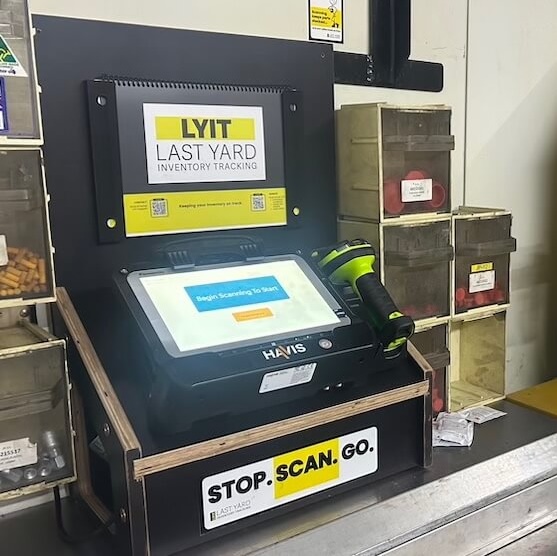
The situation before LYIT
Before LYIT, the site experienced:
-
Low confidence in stock levels at the shelf
-
Reactive ordering caused by unexpected stockouts
-
Manual checks and stocktakes to confirm availability
-
Reliance on individual knowledge to understand real consumption
Stock levels at the shelf did not reflect actual usage
What was deployed
LYIT was deployed in stages across four onsite terminals:
- 2 underground satellitte workshops
- 2 main surface workshops
Each terminal was operational within approximately one week once equipment and support were onsite.
The system was used to manage:
- Critical parts and consumables required to maintain heavy mobile equipment
-
Hydraulic fittings and other high-use components
-
Nuts, bolts, and fasteners
-
Consumables such as gloves and safety glasses
Usage varied by location, with higher-turnover areas processing several hundred part issues per month.
Low-stock issues identified before work was impacted
Operational outcomes
After deployment:
Ordering shifted from reacting to shortages to planning based on early low-stock signals.
-
Low-stock items were identified earlier, before impacting maintenance
-
Parts coordinators could place orders remotely using daily low-stock reports
-
Fewer instances of work being delayed due to unexpected stockouts of high-use items
-
Reduced reliance on manual checks to confirm availability
The shift was noticeable in day-to-day workflow, particularly for parts coordinators managing replenishment remotely.
Ordering shifted from reactive to planned replenishment
Current usage
LYIT is used daily as part of normal maintenance operations across underground and surface workshops. Adoption occurred without pushback during rollout and usage has remained consistent since installation.
The site has indicated interest in additional terminals and contract extensions.

See if LYIT fits your site
A short call to talk through your site and whether LYIT makes sense.